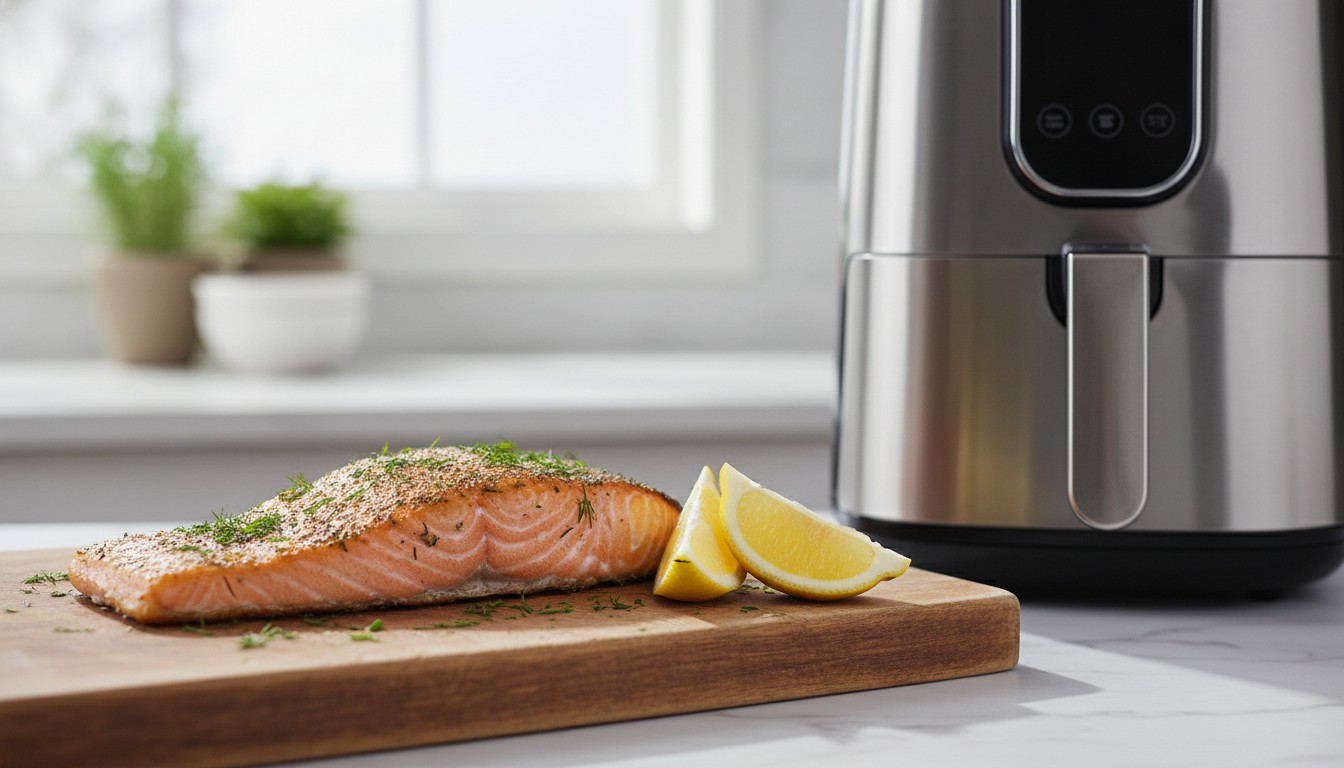
Air fryer salmon for newbies doesn’t should be intimidating. Actually, it’s one of many best, healthiest, and most scrumptious methods to prepare dinner this omega-3-rich fish—particularly if you happen to’re new to utilizing an air fryer. Whether or not you’ve by no means cooked salmon earlier than otherwise you’re simply exploring air frying, this methodology delivers crispy pores and skin, tender flesh, and restaurant-quality leads to underneath quarter-hour. No oil splatters, no overcooking, and no guesswork. Simply easy substances, minimal cleanup, and a wonderfully cooked fillet each time.
Table of Contents
- Why Air Fryer Air fryer salmon for newbies
- Selecting the Proper Air fryer salmon for newbies
- Important Instruments and Components
- Step-by-Step Air fryer salmon for newbies
- Professional Suggestions for Good Air fryer salmon for newbies
- Frequent Errors to Keep away from
- Taste Variations to Attempt
- Dietary Advantages of Air fryer salmon for newbies
- Key Takeaways
- FAQ: Air fryer salmon for newbies
- Conclusion
In the event you’ve been hesitant to attempt salmon due to sophisticated recipes or worry of drying it out, the air fryer is your secret weapon. It circulates sizzling air evenly across the fish, locking in moisture whereas creating that fascinating golden crust. And one of the best half? You don’t have to be a chef to nail it. With the correct method, timing, and seasoning, even first-time cooks can serve up a gourmet-style meal at dwelling.
This information walks you thru every part it’s worthwhile to know—from selecting the best minimize to mastering temperature and timing—so your air fryer salmon seems flaky, flavorful, and foolproof. Let’s dive in.
Why Air Fryer Air fryer salmon for newbies
Air frying has revolutionized dwelling cooking, and salmon is among the standout proteins that advantages most from this methodology. Not like conventional pan-frying or baking, air frying makes use of speedy sizzling air circulation to prepare dinner meals shortly and evenly. For newbies, this implies much less danger of undercooking or burning—and much fewer kitchen messes.
Salmon is of course wealthy in wholesome fat, which helps it keep moist throughout high-heat cooking. The air fryer enhances this by crisping the pores and skin (if left on) whereas preserving the inside tender and buttery. Plus, you utilize little to no added oil, making it a heart-healthy choice that aligns with clear consuming targets.
One other benefit? Pace. Most air fryer salmon recipes take between 8 to 12 minutes, relying on thickness. That’s quicker than preheating an oven and much faster than ready for a skillet to warmth up. For busy weeknights or last-minute dinners, it’s a game-changer.
Key Advantages of Air fryer salmon for newbies
- Quick cooking time: Prepared in underneath quarter-hour.
- Minimal oil wanted: Makes use of as much as 80% much less oil than deep frying.
- Even warmth distribution: Prevents sizzling spots and ensures uniform doneness.
- Simple cleanup: Most air fryer baskets are non-stick and dishwasher-safe.
- Constant outcomes: Nice for repeatable success, even for novices.
Selecting the Proper Air fryer salmon for newbies
Not all salmon is created equal—and your alternative could make or break your dish. For air frying, you’ll need a minimize that’s thick sufficient to remain juicy however skinny sufficient to prepare dinner by means of shortly. Contemporary or frozen, skin-on or skinless—every choice has its professionals and cons.
Contemporary salmon fillets are best if you will get high-quality, sustainably sourced fish. Search for vivid, agency flesh with a clear ocean scent. Keep away from something with a robust fishy odor or uninteresting look. A 6- to 8-ounce fillet, about 1 inch thick, works greatest for even cooking.
Frozen salmon is a handy and infrequently extra inexpensive different. Simply be sure it’s absolutely thawed earlier than cooking—pat it dry totally to forestall extra moisture from steaming as an alternative of crisping. Many manufacturers now supply individually vacuum-sealed parts, excellent for single servings.
As for pores and skin: leaving it on helps the fillet maintain its form and provides texture. In the event you’re new to cooking salmon, begin with skin-on—it’s simpler to deal with and provides you that satisfying crunch. You may all the time take away it after cooking if most popular.
Salmon Reduce Comparability Desk
| Reduce Sort | Finest For | Cooking Tip |
|---|---|---|
| Pores and skin-on fillet | Crispy pores and skin, straightforward dealing with | Place skin-side down in basket |
| Skinless fillet | Fast absorption of seasonings | Flippantly oil to forestall sticking |
| Wild-caught | Leaner, firmer texture | Watch intently—cooks quicker |
| Farm-raised | Greater fats content material, richer taste | Nice for newbies—extra forgiving |
Important Instruments and Components
You don’t want a completely stocked kitchen to make air fryer salmon. Just a few fundamentals will set you up for fulfillment. First, guarantee your air fryer is clear and preheated in case your mannequin recommends it (many more moderen ones don’t require preheating, however it helps with crispiness).
For substances, hold it easy. Just a little salt, pepper, and lemon go a good distance. However don’t be afraid to experiment with herbs and spices when you’ve mastered the fundamentals.
Should-Have Instruments
- Air fryer (basket or tray type)
- Tongs or silicone spatula
- Paper towels (for drying fish)
- Small brush (for oil or glaze)
Fundamental Seasoning Components
- Kosher salt
- Freshly floor black pepper
- Olive oil or avocado oil spray
- Contemporary lemon juice or zest
- Garlic powder or minced contemporary garlic
- Dill, paprika, or Outdated Bay seasoning (non-compulsory)
Professional tip: Keep away from moist marinades for air frying—they will trigger steaming as an alternative of crisping. Dry rubs or mild oil coatings work greatest.
Step-by-Step Air fryer salmon for newbies
Now that you simply’ve received your instruments and substances prepared, let’s prepare dinner. This foolproof methodology ensures juicy, flavorful salmon each time—even when it’s your first try.
Step 1: Prep the Salmon
Take away the salmon from the fridge 10–quarter-hour earlier than cooking to carry it to room temperature. This promotes even cooking. Pat the fillet dry with paper towels—that is essential for reaching a crispy exterior.
In case your fillet has pin bones, use fish tweezers to take away them. Examine alongside the middle line the place they’re commonest.
Step 2: Season Generously
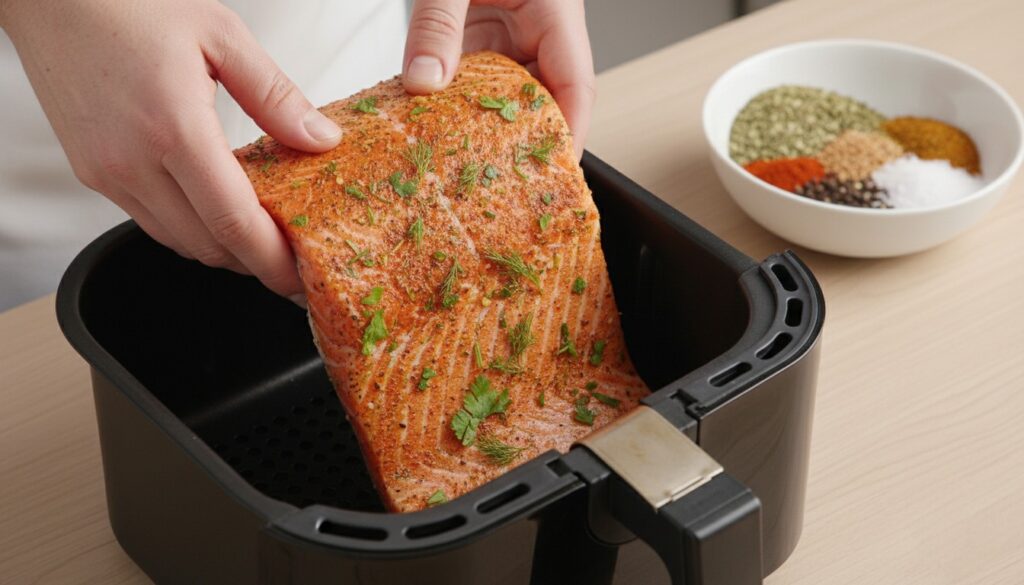
Flippantly brush each side of the salmon with oil—simply sufficient to coat. This helps the seasoning stick and prevents sticking to the basket. Sprinkle with salt, pepper, and any extra spices you want. A easy combo of garlic powder, smoked paprika, and a pinch of dried dill works fantastically.
For further taste, add a squeeze of contemporary lemon juice simply earlier than cooking. Keep away from including it too early, as acid can begin to “prepare dinner” the fish (like in ceviche).
Step 3: Preheat and Organize
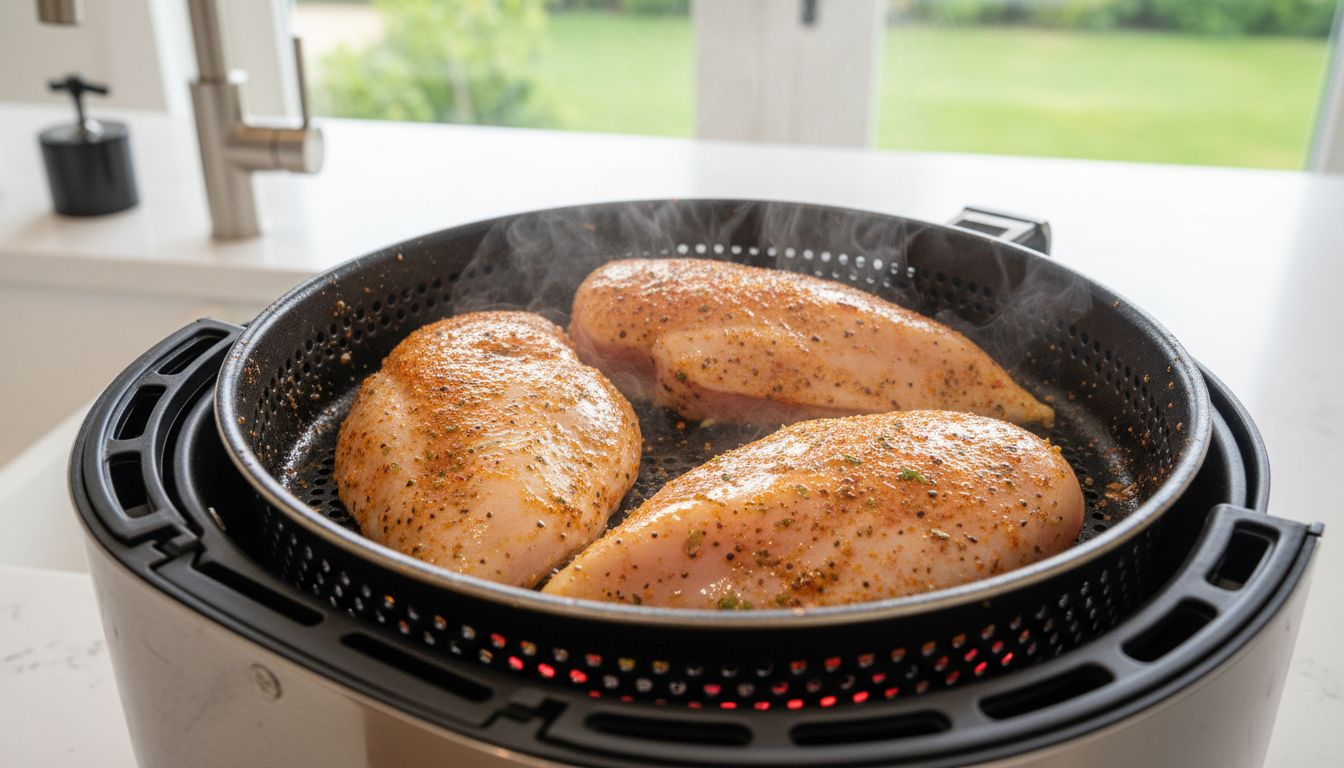
Preheat your air fryer to 390°F (200°C) for 3–5 minutes in case your mannequin permits. This step isn’t all the time vital, however it helps create a greater sear.
Place the salmon within the basket skin-side down (if skin-on). Go away area between items so air can flow into. Overcrowding results in uneven cooking.
Step 4: Prepare dinner to Perfection
Prepare dinner for 8–12 minutes, relying on thickness. A 1-inch fillet often takes about 10 minutes. The salmon is finished when it flakes simply with a fork and reaches an inside temperature of 145°F (63°C).
Use a meat thermometer for accuracy—that is one of the simplest ways to keep away from overcooking. Insert it into the thickest half, avoiding the bone or pores and skin.
Step 5: Relaxation and Serve
Let the salmon relaxation for two–3 minutes after cooking. This enables the juices to redistribute, preserving the fish moist. Serve instantly with lemon wedges, a drizzle of herb butter, or your favourite facet.
Professional Suggestions for Good Air fryer salmon for newbies
Even small changes can elevate your salmon from good to distinctive. Listed below are pro-level ideas to assist newbies keep away from frequent pitfalls and obtain restaurant-quality outcomes at dwelling.
- Don’t skip the drying step: Moisture is the enemy of crispiness. All the time pat salmon dry earlier than seasoning.
- Use a light-weight oil spray: An excessive amount of oil could cause smoking. A fast spritz is sufficient.
- Flip midway (non-compulsory): For further even browning, flip the fillet on the 5-minute mark—however it’s not all the time vital.
- Modify time for thickness: Thicker cuts want extra time; thinner ones prepare dinner quicker. When doubtful, verify early.
- Add aromatics: Place lemon slices or contemporary herbs (like rosemary) within the basket for infused taste.
- Clear your air fryer commonly: Constructed-up grease can have an effect on style and efficiency.
Frequent Errors to Keep away from
Even with one of the best intentions, newbies can run into points. Realizing what to keep away from saves time, cash, and frustration.
Overcooking: Salmon dries out shortly. Follow the beneficial time and use a thermometer. Keep in mind, it’ll proceed cooking barely after removing.
Underseasoning: Salmon has a light taste, so don’t be shy with salt and spices. Style your rub earlier than making use of.
Utilizing moist marinades: Sauces like teriyaki or soy-based glazes can burn or steam the fish. Apply them after cooking or use a dry rub.
Ignoring thickness: A skinny tail piece will prepare dinner a lot quicker than a thick middle minimize. Modify timing accordingly or select uniform fillets.
Skipping the remaining interval: Resting ensures juiciness. Speeding to serve can result in a dry chunk.
Taste Variations to Attempt
When you’ve mastered the fundamentals, it’s time to get inventive. Air fryer salmon is extremely versatile—swap out seasonings, add glazes, or pair with world flavors.
Easy Lemon-Herb
Brush with olive oil, season with salt, pepper, garlic powder, and dried dill. High with lemon slices earlier than cooking. End with contemporary parsley.
Honey Garlic Glaze
Combine 1 tbsp honey, 1 tsp soy sauce, 1 minced garlic clove, and a splash of rice vinegar. Brush on over the last 2 minutes of cooking.
Spicy Cajun
Use a store-bought or home made Cajun mix. Add a pinch of cayenne for warmth. Serve with a cooling yogurt sauce.
Miso-Butter
Mix softened butter with white miso paste and a contact of mirin. Unfold over cooked salmon and broil for 1 minute (in case your air fryer has a broil operate).
Dietary Advantages of Air fryer salmon for newbies
Salmon isn’t simply scrumptious—it’s a dietary powerhouse. Wealthy in high-quality protein, omega-3 fatty acids, vitamin D, and B nutritional vitamins, it helps coronary heart well being, mind operate, and reduces irritation.
In keeping with the American Coronary heart Affiliation, consuming fatty fish like salmon a minimum of twice per week can decrease the danger of coronary heart illness. The air frying methodology preserves these vitamins higher than deep frying, which may degrade wholesome fat at excessive temperatures.
A 6-ounce cooked portion of salmon offers over 40 grams of protein and practically 2,000 mg of omega-3s—greater than the beneficial weekly consumption in a single meal. Plus, with minimal added oil, you’re preserving energy and saturated fats in verify.
Key Takeaways
- Air fryer salmon for beginners is quick, straightforward, and delivers constant, restaurant-quality outcomes.
- Use contemporary or thawed salmon fillets, 1 inch thick, skin-on for greatest texture.
- Prepare dinner at 390°F (200°C) for 8–12 minutes, checking inside temperature (145°F).
- Pat dry earlier than seasoning, use minimal oil, and keep away from moist marinades.
- Relaxation for two–3 minutes after cooking to retain moisture.
- Experiment with easy seasonings like lemon, garlic, dill, or Cajun spice.
- Air frying preserves vitamins and reduces oil use in comparison with conventional strategies.
FAQ: Air fryer salmon for newbies
Can I prepare dinner frozen Air fryer salmon for newbies?
Sure, however it’s greatest to thaw it first. If cooking from frozen, enhance time by 3–5 minutes and make sure the inside temperature reaches 145°F. Pat dry totally after thawing to keep away from steaming.
How do I stop salmon from sticking to the air fryer basket?
Flippantly spray the basket with oil or use a silicone liner. Pat the salmon dry and keep away from shifting it too quickly—let it crisp for the primary couple of minutes earlier than checking.
Is air fryer salmon wholesome?
Completely. It’s wealthy in omega-3s, protein, and nutritional vitamins, and makes use of little to no added oil. It’s a heart-healthy cooking methodology beneficial by nutritionists.
Conclusion
Air fryer salmon for beginners is just not solely achievable—it’s pleasurable. With minimal effort, you possibly can create a nutritious, flavorful meal that impresses household and visitors alike. The air fryer’s pace, ease, and constant outcomes make it the right device for mastering this nutritious fish.
Begin easy, comply with the steps, and don’t be afraid to experiment. Whether or not you’re cooking for one or feeding a crowd, air fryer salmon is a dependable, wholesome, and scrumptious choice that belongs in each dwelling prepare dinner’s rotation.
Able to attempt it tonight? Seize your fillet, fireplace up the air fryer, and style the distinction for your self.