The Allure of a Homemade Spicy Dill Pickle Recipe
For many, the humble pickle is a staple – a tangy, crunchy companion to sandwiches and burgers. But for those who crave an extra dimension of flavor, a spicy dill pickle recipe offers an exhilarating twist. The combination of classic dill and garlic notes with a searing heat creates a complex taste profile that is both refreshing and exciting. Making your own allows for unparalleled control over the ingredients, ensuring freshness, quality, and a personalized level of spice that store-bought options simply can’t match. Imagine biting into a crisp pickle, first greeted by the familiar tang, then a slow, building warmth that leaves a pleasant tingle. That’s the magic of a well-executed spicy dill pickle recipe.

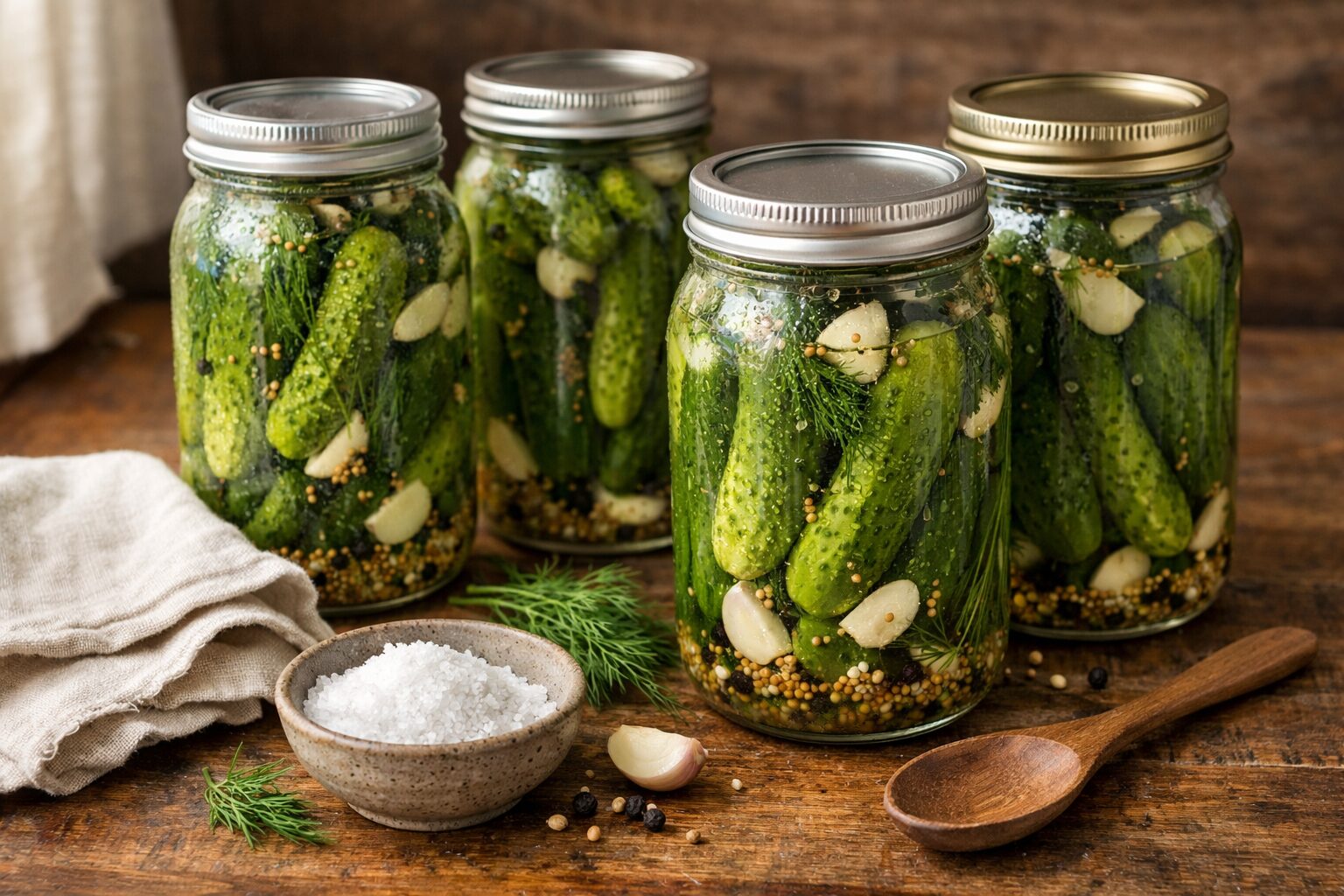
A close-up shot of several clear glass canning jars, some empty and sterilized, others partially fil…
Essential Ingredients for Your Spicy Dill Pickle Recipe
Crafting the perfect spicy dill pickle recipe starts with selecting the right components. Each ingredient plays a crucial role in the final taste, texture, and heat of your pickles.
Cucumbers: The Foundation of Flavor
The type of cucumber you choose is paramount. For the best results in your spicy dill pickle recipe, opt for pickling cucumbers, often labeled as ‘Kirby’ or ‘Gherkin.’ These varieties are typically smaller, firmer, and have thinner skins, making them ideal for absorbing the brine and retaining their crunch. Avoid larger slicing cucumbers, as they tend to become soft and watery when pickled. Look for firm, unblemished cucumbers, ideally fresh from a farmer’s market, for the crispiest homemade pickles.
Fresh Dill: The Herbaceous Heart
Dill is non-negotiable for a classic dill pickle. Use fresh dill sprigs or dill heads (the flowering part of the plant) for the most potent flavor. Dried dill can be used in a pinch, but it won’t provide the same vibrant, aromatic punch that fresh dill brings to your spicy dill pickle recipe. Aim for about 1-2 sprigs or a small head per pint jar.
Garlic: Pungent Perfection
Garlic cloves are another cornerstone. Freshly peeled garlic cloves, sliced or left whole, will infuse your pickles with their characteristic pungency. Adjust the quantity to your liking; typically, 2-3 cloves per pint jar is a good starting point for this spicy dill pickle recipe. Some enthusiasts even roast their garlic lightly for a different depth of flavor.
Chili Peppers: Bringing the Heat to Your Spicy Dill Pickle Recipe
This is where the ‘spicy’ in your spicy dill pickle recipe truly comes alive. The choice of chili pepper dictates the heat level. Here are some popular options:
- Jalapeños: Mild to medium heat, offering a pleasant warmth without overpowering the dill. Slice them into rings or spears.
- Serrano Peppers: Hotter than jalapeños, providing a more noticeable kick. Use sparingly if you’re sensitive to heat.
- Habaneros: For serious heat lovers. Even a small slice can deliver intense spice. Handle with gloves!
- Cayenne Peppers: Can be used fresh or as dried flakes/powder for a consistent, sharp heat throughout your spicy dill pickle recipe.
- Red Pepper Flakes: An easy way to add adjustable heat. A teaspoon or two per jar can significantly amp up the spice.
You can also experiment with dried whole chilies like Arbol or Thai chilies for a different flavor profile. Remember, the seeds and membranes of peppers contain the most capsaicin, so removing them will reduce the heat.

An overhead shot of several filled and sealed glass jars of spicy dill pickles, showcasing the vibra…
Vinegar: The Tangy Preserver
Distilled white vinegar is the standard for pickling due to its clear color and consistent acidity (5% acidity is crucial for food safety). Apple cider vinegar can also be used, offering a slightly fruitier, mellower flavor, but ensure it also has 5% acidity. The vinegar is vital for preservation and provides the characteristic tang of your spicy dill pickle recipe.
Pickling Salt: Not Just Any Salt
Use pickling salt, which is a fine-grained, pure salt free of anti-caking agents and iodine. These additives can turn your brine cloudy or discolor your pickles. Kosher salt (without anti-caking agents) is also a good alternative. Do not use table salt. The salt content is critical for flavor and safety in your spicy dill pickle recipe.
Water: The Brine Base
Filtered water is best to ensure no unwanted minerals or chlorine interfere with the pickling process or flavor. Tap water can sometimes contain elements that lead to cloudy brine or off-flavors.
Spices: Enhancing Complexity
Beyond dill and garlic, a blend of pickling spices adds depth. Common additions include:
- Mustard seeds
- Coriander seeds
- Black peppercorns
- Fennel seeds
- Bay leaves
A good quality pickling spice blend can be purchased, or you can create your own. These spices contribute to the overall aromatic profile of your spicy dill pickle recipe.

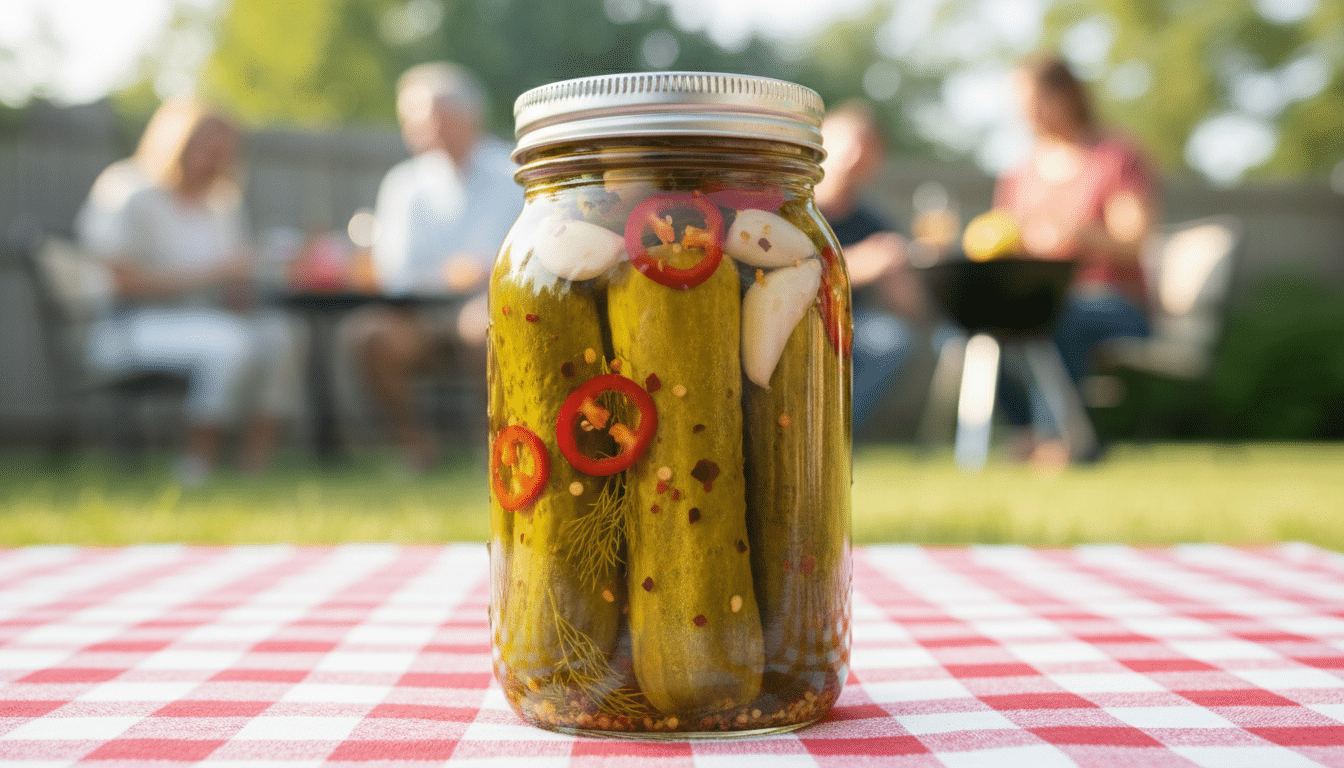
A dynamic still life composition featuring a single, perfectly crunchy spicy dill pickle spear, fres…
Step-by-Step Guide to Crafting Your Spicy Dill Pickle Recipe
Now that you have all your ingredients, let’s dive into the process of making your very own spicy dill pickle recipe. This guide focuses on refrigerator pickles, which are easier for beginners and offer a vibrant, fresh flavor. For longer-term storage, water bath canning is an option.
Preparation is Key
1. Wash Cucumbers: Thoroughly wash your pickling cucumbers under cold running water. Gently scrub off any dirt. For extra crispness, some people soak cucumbers in an ice bath for a few hours before pickling.
2. Trim Ends: Slice off about 1/16th of an inch from both ends of each cucumber, especially the blossom end (the end opposite the stem). The blossom end contains enzymes that can lead to soft pickles.
3. Slice Cucumbers: Decide on your desired cut. You can leave small gherkins whole, slice larger ones into spears, or cut them into rounds. Spears are popular for snacking and fit well into jars. Ensure consistent sizing for even pickling.
4. Prepare Aromatics: Peel garlic cloves. Slice your chosen chili peppers (jalapeños, serranos, etc.) into rings or spears. Wash and trim fresh dill.
Sterilizing Your Jars
While not strictly necessary for refrigerator pickles (as they are not shelf-stable), sterilizing jars helps ensure a clean environment and prevents unwanted bacteria from affecting your spicy dill pickle recipe. Wash pint or quart-sized canning jars and their lids thoroughly with hot, soapy water. Rinse well. You can then sterilize them by boiling them in water for 10 minutes, running them through a dishwasher’s sanitize cycle, or heating them in an oven at 225°F (107°C) for 10 minutes. Keep them hot until ready to fill.
Packing the Jars
This is a fun and creative step in your spicy dill pickle recipe. Carefully pack your prepared cucumbers into the hot jars. Try to pack them snugly but not so tightly that the brine can’t circulate. Between the cucumbers, tuck in your fresh dill sprigs, garlic cloves, and chili pepper slices. Add any additional pickling spices (mustard seeds, peppercorns, etc.) directly into the jars. A good rule of thumb is to add a generous amount of dill and garlic, and then adjust the chili peppers based on your preferred heat level for your spicy dill pickle recipe.
Crafting the Brine
The brine is the heart of your spicy dill pickle recipe. It’s where the magic of preservation and flavor infusion happens. A basic brine ratio is typically 1 part vinegar to 1 part water, with salt added to taste and for safety.
Basic Spicy Dill Pickle Brine Recipe (for approx. 2-3 pint jars):
- 2 cups distilled white vinegar (5% acidity)
- 2 cups filtered water
- 2 tablespoons pickling salt
- 1 tablespoon granulated sugar (optional, helps balance flavors and can enhance crispness)
Combine the vinegar, water, pickling salt, and optional sugar in a non-reactive saucepan. Bring the mixture to a rolling boil over medium-high heat, stirring occasionally to dissolve the salt and sugar. Once boiling, remove from heat. This brine will be hot, so handle with care.
Pouring and Sealing
Carefully pour the hot brine over the packed cucumbers in each jar, ensuring the cucumbers are completely submerged. Leave about 1/2 inch of headspace from the rim of the jar. Use a non-metallic utensil (like a chopstick or plastic knife) to gently dislodge any air bubbles trapped within the jar. Top off with more brine if needed to maintain the headspace.
Wipe the rims of the jars clean with a damp cloth. Place the lids on the jars and screw on the bands until finger-tight. This forms a seal. Your homemade spicy dill pickle recipe is almost complete!
Cooling and Refrigeration
Allow the jars to cool completely at room temperature. Once cool, transfer them to the refrigerator. The pickles will need time to properly pickle and for the flavors to meld. While you can technically eat them after 24 hours, they are best after at least 3-5 days, and their flavor will continue to develop over 1-2 weeks. This waiting period is crucial for the full spicy dill pickle recipe experience.
Tips for Extra Crunchy Pickles in Your Spicy Dill Pickle Recipe
Achieving that satisfying crunch is a hallmark of a great spicy dill pickle recipe. Here are some pro tips:
- Freshness is Key: Start with the freshest, firmest cucumbers possible. The older the cucumber, the softer the pickle.
- Ice Bath: Soaking cucumbers in an ice bath for 2-4 hours before pickling can help firm them up.
- Blossom End Removal: Always trim the blossom end of the cucumber, which contains enzymes that can soften pickles.
- Grape Leaves: Adding a fresh grape leaf (or oak leaf, cherry leaf) to each jar can help keep pickles crisp. The tannins in the leaves inhibit softening enzymes.
- Calcium Chloride: A pickling crisping agent (like Pickle Crisp) containing calcium chloride can be added to the jars for guaranteed crunch. Follow package directions.
- Avoid Overcooking: If you’re water bath canning, avoid over-processing, as excessive heat can lead to soft pickles.
Flavor Variations and Additions to Your Spicy Dill Pickle Recipe
While the classic spicy dill pickle recipe is fantastic, don’t be afraid to experiment and personalize your batch. Here are some ideas:
- Herbal Infusions: Add a sprig of fresh thyme, rosemary, or oregano for different aromatic notes.
- Sweet Heat: A pinch more sugar in the brine can create a ‘sweet and spicy’ dill pickle. Some people even add a few slices of onion.
- Citrus Zest: A strip of lemon or lime zest can add a bright, zesty undertone that complements the dill and spice.
- Root Vegetables: Thin slices of carrot or even a small piece of horseradish root can add unique flavors and textures.
- Exotic Spices: Consider star anise, cloves, or a cinnamon stick for a surprisingly complex and warm spicy dill pickle recipe.
Storage and Shelf Life of Your Spicy Dill Pickle Recipe
Refrigerator Pickles
Your homemade refrigerator spicy dill pickle recipe will last for about 4-6 weeks in the refrigerator. Ensure they are always submerged in brine. Over time, they may lose some crispness, but the flavor will remain excellent.
Water Bath Canned Pickles (for long-term storage)
If you follow proper water bath canning procedures (using new lids, processing for the correct time for your altitude), your spicy dill pickle recipe can be shelf-stable for up to a year in a cool, dark pantry. Once opened, they should be refrigerated and consumed within a few weeks.
Serving Suggestions for Your Homemade Spicy Dill Pickles
Your delicious spicy dill pickle recipe deserves to be enjoyed in many ways!
- Classic Snacking: Straight from the jar, they make a fantastic, low-calorie, and flavorful snack.
- Sandwich & Burger Booster: Add a few slices to your favorite sandwich, wrap, or burger for an extra layer of crunch and heat. They are especially good with rich meats.
- Salad Topper: Chop them up and add to potato salad, tuna salad, or egg salad for a zesty kick.
- Charcuterie Boards: A beautiful addition to any cheese or charcuterie platter, offering a bright, piquant contrast to rich cheeses and cured meats.
- Cocktail Garnish: A spear of your spicy dill pickle recipe makes an excellent garnish for a Bloody Mary or a dirty martini with a twist.
- Fried Pickles: For a truly indulgent treat, batter and deep-fry your homemade spicy dill pickles for a crispy, spicy appetizer.
- Relish: Finely chop your pickles to create a vibrant, spicy relish perfect for hot dogs, bratwursts, or as a condiment for grilled fish.
Troubleshooting Common Pickling Issues for Your Spicy Dill Pickle Recipe
Even experienced picklers can encounter issues. Here’s how to address some common problems with your spicy dill pickle recipe:
Soft Pickles
- Cause: Old cucumbers, not trimming blossom ends, low-quality water, incorrect processing (if canning), or improper salt ratio.
- Solution: Always use fresh, firm pickling cucumbers. Trim blossom ends. Use filtered water. Ensure proper pickling salt ratio. Consider adding grape leaves or pickling crisping agent.
Cloudy Brine
- Cause: Minerals in tap water, using iodized salt, spoilage (rare with proper technique), or natural fermentation.
- Solution: Use filtered water and pickling salt. If the pickles smell off, are slimy, or show mold, discard them. A slightly cloudy brine with a good smell is usually fine, indicating natural fermentation.
Pickles Not Spicy Enough
- Cause: Not enough chili peppers, using mild peppers, or peppers not infusing enough heat.
- Solution: Increase the quantity of chili peppers. Use hotter varieties (serrano, habanero). Consider adding more red pepper flakes directly into the jars. For maximum heat, slice peppers in half lengthwise to expose more seeds and membranes.
By understanding these common challenges, you can refine your spicy dill pickle recipe and consistently produce excellent results. Each batch is a learning experience, leading to even better pickles next time.
The Health Benefits of Your Spicy Dill Pickle Recipe
Beyond their incredible taste, homemade spicy dill pickles can offer some surprising health benefits. While they are high in sodium, they can be a good source of vitamins K and A, especially if you include a variety of fresh ingredients. The fermentation process (if you allow it to ferment slightly) can also introduce beneficial probiotics, which are great for gut health. Moreover, the capsaicin in chili peppers, which gives your spicy dill pickle recipe its kick, has been linked to metabolism boosting and anti-inflammatory properties. Enjoying your homemade pickles in moderation can be a delicious way to add flavor and a little bit of health to your diet.

A steaming saucepan on a stovetop, filled with a clear pickling brine mixture (vinegar, water, salt,…
Comparison Analysis
| Feature | Refrigerator Pickles | Water Bath Canned Pickles |
|---|---|---|
| Shelf Life | 4-6 weeks (refrigerated) | Up to 1 year (pantry, unopened) |
| Process | Simpler, no special equipment | Requires canning equipment, precise timing |
| Flavor | Fresher, brighter taste | Slightly softer texture, deeper flavor |
| Safety | Must be kept refrigerated | Shelf-stable, proper sealing crucial |
+Pros
- Customizable heat level, from mild jalapeño to fiery habanero.
- Superior fresh flavor and crunch compared to store-bought options.
- Control over ingredients, avoiding unwanted additives and preservatives.
- Economical way to preserve cucumbers and enjoy them year-round.
- Satisfying and rewarding culinary project.
- Great for gut health if natural fermentation occurs.
–Cons
- –Requires time and effort for preparation and brining.
- –Can be tricky to achieve consistent crunch without practice.
- –High sodium content, which may be a concern for some diets.
- –Refrigerator pickles have a limited shelf life.
- –Risk of spoilage if proper sanitation and ratios aren’t followed.
Key Takeaways
- Master the art of selecting the freshest cucumbers and complementary ingredients for your spicy dill pickle recipe.
- Learn to customize the heat level of your pickles using various chili peppers and spices.
- Discover essential techniques for achieving maximum crunch and vibrant flavor in every bite.
- Understand the pickling process, from jar sterilization to proper storage, for safe and delicious results.
- Explore creative ways to enjoy and serve your homemade spicy dill pickles beyond just snacking.
Frequently Asked Questions
What kind of cucumbers are best for a spicy dill pickle recipe?
For the best spicy dill pickle recipe, use small, firm pickling cucumbers like Kirby or Gherkin varieties. These have thin skins and crisp flesh that holds up well during the pickling process. Avoid large slicing cucumbers as they tend to become soft.
What type of vinegar should I use for my spicy dill pickle recipe?
To ensure safety and proper pickling, use distilled white vinegar with 5% acidity. Apple cider vinegar can also be used for a slightly different flavor, but again, ensure it has 5% acidity. This is crucial for your spicy dill pickle recipe.
How do I make sure my spicy dill pickle recipe turns out crunchy?
To make your spicy dill pickle recipe extra crunchy, start with very fresh cucumbers and soak them in an ice bath for a few hours. Always trim the blossom end of the cucumber, and consider adding a grape leaf or a pickling crisping agent (calcium chloride) to each jar.
How long do homemade spicy dill pickles last?
For refrigerator pickles, your spicy dill pickle recipe should be stored in the refrigerator for 4-6 weeks. If properly water bath canned, they can be shelf-stable for up to a year in a cool, dark pantry. Once opened, always refrigerate.
Can I adjust the spice level in my spicy dill pickle recipe?
Yes, you can absolutely adjust the heat! For a milder spicy dill pickle recipe, use fewer jalapeños or just red pepper flakes. For more heat, add hotter peppers like serranos or habaneros, or increase the amount of red pepper flakes and sliced peppers.
Why is my spicy dill pickle recipe brine cloudy?
Cloudy brine can be caused by minerals in tap water, using iodized salt, or natural fermentation. If the pickles smell good and are firm, a slightly cloudy brine is usually fine. If they smell off or are slimy, discard them. Always use filtered water and pickling salt for your spicy dill pickle recipe.
Do I need to sterilize jars for my spicy dill pickle recipe?
While not strictly necessary for refrigerator pickles, sterilizing jars helps ensure a clean environment and prevents unwanted bacteria. For water bath canning, sterilization is a critical step for food safety and shelf stability for your spicy dill pickle recipe.
What are the best ways to serve my spicy dill pickle recipe?
The best way to enjoy your homemade spicy dill pickle recipe is straight from the jar as a snack! They’re also fantastic on sandwiches, burgers, chopped into salads, or served on a charcuterie board. Don’t forget them as a garnish for Bloody Marys!
Can I add other ingredients to my spicy dill pickle recipe for different flavors?
You can add other herbs like thyme or rosemary, different spices like fennel seeds or star anise, or even a strip of citrus zest to your spicy dill pickle recipe for unique flavor profiles. Some people also add sliced onions or carrots.
Should I add sugar to my spicy dill pickle recipe brine?
Yes, a small amount of sugar (1-2 tablespoons per batch) can help balance the acidity of the vinegar and enhance the overall flavor profile of your spicy dill pickle recipe, and some believe it aids in crispness. It’s optional, but highly recommended.
Conclusion
Embarking on the journey to create your own **spicy dill pickle recipe** is more than just cooking; it’s about mastering a craft that brings immense satisfaction and incredible flavor to your table. From the initial selection of crisp cucumbers to the careful packing of jars with fresh dill and fiery peppers, every step contributes to a pickle that’s bursting with personality and a customizable kick. We’ve explored the essential ingredients, demystified the brining process, and armed you with tips to ensure every bite is perfectly crunchy and tantalizingly spicy. Whether you’re a seasoned pickler or a curious beginner, this comprehensive guide provides all the knowledge you need to confidently tackle this spicy dill pickle recipe. Imagine the delight of pulling a jar of your homemade spicy dill pickles from the fridge, knowing you crafted every element. These aren’t just condiments; they’re a testament to your culinary adventurousness, ready to elevate any meal or simply shine as a standalone snack. So, gather your ingredients, embrace the heat, and start pickling! Your taste buds (and your friends!) will thank you for this unforgettable spicy dill pickle recipe. Don’t wait – dive into the world of homemade pickles today and experience the unparalleled taste of perfection.