Key Takeaways
- Barrel aging significantly enhances flavor complexity, smoothness, and aroma in spirits, beer, and cocktails.
- Choosing the right barrel (size, wood type, char level) is crucial for achieving desired flavor profiles.
- Small oak barrels are ideal for home use, accelerating the aging process compared to full-sized distillery barrels.
- Sanitation, proper storage, and regular tasting are essential to prevent contamination and ensure optimal results.
- Barrel aging offers versatility, with recipes for barrel aging extending beyond alcohol to include hot sauces, vinegars, and even maple syrup.
The Art and Science of Barrel Aging: A Deep Dive
Barrel aging is more than just storing a liquid in a wooden container; it’s a dynamic interaction between the liquid, the wood, and the environment. This process imparts unique characteristics, transforming the base product into something far more complex and refined. The porous nature of wood, particularly oak, allows for a slow exchange of oxygen, which mellows harsh notes and facilitates the development of new aromatic compounds. Simultaneously, compounds from the wood itself – such as vanillin, lactones, and tannins – leach into the liquid, contributing flavors of vanilla, coconut, spice, and a pleasant astringency.
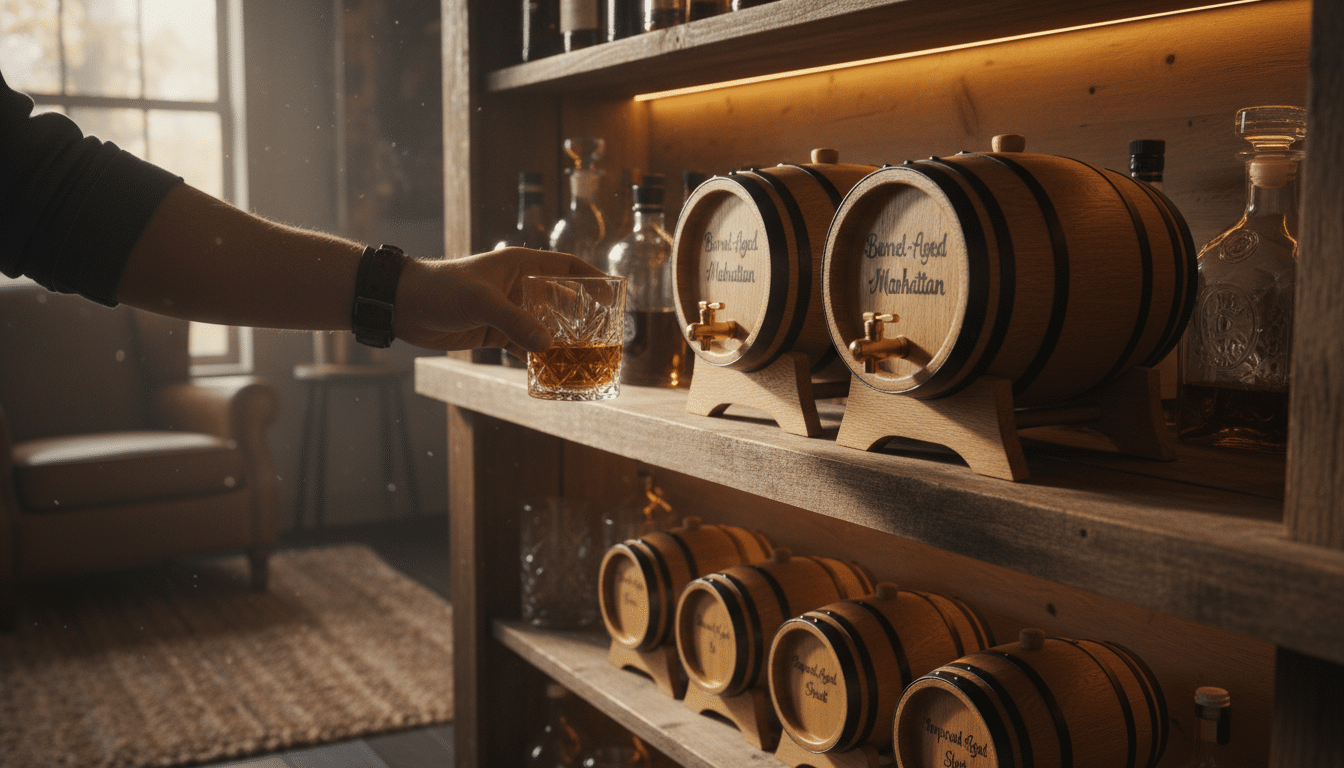
A rustic, warm-toned image of a home bar setup featuring several small oak barrels of different size…
Why Barrel Age? Benefits Beyond the Bottle
For centuries, distillers and brewers have relied on barrel aging to craft their finest products. The benefits are numerous and profound:
- Enhanced Flavor Complexity: Wood imparts a vast array of flavors, from sweet vanilla and caramel to spicy cinnamon and clove, alongside nutty and toasted notes. This creates a multi-layered taste experience that’s impossible to achieve otherwise.
- Smoothness and Mellowing: The slow oxidation through the wood pores helps to break down harsher alcohols and volatile compounds, resulting in a smoother, more palatable drink with a softer mouthfeel. This is particularly noticeable in high-proof spirits.
- Unique Aromas: Beyond taste, recipes for barrel aging contributes a rich bouquet of aromas, often described as oaky, woody, smoky, or earthy, complementing the inherent aromas of the aged product.
- Color Development: The wood, especially charred oak, imparts a characteristic amber or brown hue to spirits and some beers, a visual testament to the aging process.
Choosing Your Barrel: Size, Wood, and Char
The barrel itself is a primary ingredient in any of the best recipes for barrel aging. Making the right choice is paramount to your success.
Barrel Size: The Home Advantage
While commercial distilleries use massive 53-gallon barrels, home enthusiasts typically opt for smaller barrels, ranging from 1 to 20 liters. Smaller barrels offer a much greater surface area-to-volume ratio, which significantly accelerates the aging process. What might take years in a large barrel can be achieved in months or even weeks in a small one. This makes small oak barrels perfect for experimenting with various recipes for barrel aging in your home.
Oak Varieties: American, French, and Beyond
Different types of oak impart distinct flavor profiles:
- American Oak (Quercus alba): Known for contributing strong notes of vanilla, caramel, coconut, and dill. It tends to be more assertive and faster-acting, making it popular for bourbons and certain beers.
- French Oak (Quercus robur/petraea): Offers more subtle, refined flavors of spice, toast, and nutty undertones. It’s often favored for wines, brandies, and some whiskies, lending elegance rather than boldness.
- Hungarian/European Oak: Similar to French oak but can offer a slightly spicier character. Less common for home use but worth noting.
Char Levels and Toasting
Charring the inside of a barrel involves burning the wood to varying degrees, which breaks down cellulose and hemicellulose into vanillin, caramel, and other flavorful compounds. Toasting involves a gentler heat, bringing out more subtle spice and nutty notes. Char levels are typically categorized from #1 (light) to #4 (alligator char). A #3 or #4 char is common for bourbon production and can impart significant color and flavor quickly, ideal for many recipes for barrel aging spirits.
Essential Equipment for Barrel Aging at Home
Before diving into specific recipes for barrel aging, ensure you have the right tools:

An artistic, close-up shot of a small oak barrel being filled with bright red hot sauce, showing the…
- Small Oak Barrel: A 1 to 5-liter new charred oak barrel is a great starting point.
- Funnels: For easy filling.
- Bungs: To seal the barrel opening.
- Spigot: Many small barrels come with one for easy dispensing.
- Proof & Tasting Kit: A hydrometer and small tasting glasses are essential for monitoring your progress.
- Sanitation Supplies: Star San or a similar food-grade sanitizer is crucial for preventing unwanted microbial growth.
- Distilled Water: For conditioning new barrels.
- Storage Location: A cool, dark place with consistent temperature and humidity is ideal.
Unlocking Flavor: Top Recipes for Barrel Aging at Home
Now, let’s explore some fantastic recipes for barrel aging that you can try. Remember, patience and proper sanitation are key to success.
Barrel Aging Whiskey/Bourbon: Crafting Your Own Signature Spirit
This is perhaps the most iconic application of barrel aging. While true whiskey requires distillation, you can significantly enhance unaged spirits or even existing whiskeys in a small barrel.
Recipe: “New Make” Rye Whiskey Transformation
If you have access to unaged rye spirit (often called “white dog” or “new make”), a small barrel can transform it into a surprisingly complex whiskey.
Ingredients:
- 1-2 liters of high-quality unaged rye spirit (around 120-130 proof, or 60-65% ABV)
- 1-2 liter new charred American oak barrel (medium-heavy char, e.g., #3)
Instructions:
1. Condition the Barrel: Fill your new barrel with hot (not boiling) distilled water. Let it sit for 2-3 days, checking for leaks. If it leaks, keep it filled until the wood swells and seals. Empty and rinse thoroughly.
2. Fill the Barrel: Carefully pour the unaged rye spirit into the conditioned barrel using a funnel. Seal tightly with the bung.
3. Store: Place the barrel in a cool, dark place with relatively stable temperature (ideally 60-70°F or 15-21°C). Avoid direct sunlight or extreme temperature fluctuations.
4. Monitor & Taste: Begin tasting after 2-4 weeks. Use a clean glass for tasting. Look for changes in color (it will darken significantly), aroma, and flavor. You’ll notice vanilla, caramel, and oak notes developing. The harshness of the new make will mellow.
5. Aging Time: For a 1-liter barrel, aging can take anywhere from 1-6 months. Smaller barrels age faster. Once it reaches your desired flavor profile, bottle it. Over-aging in a small barrel can lead to excessive oakiness.
Recipe: Infusing Finished Bourbon with Secondary Flavors
Even a store-bought bourbon can gain new depth with a short barrel finish. This is one of the more creative recipes for barrel aging that allows for personal expression.
Ingredients:
- 1-2 liters of a good quality, moderately priced bourbon (e.g., Evan Williams, Wild Turkey 101)
- 1-2 liter new or previously used oak barrel (a used barrel will impart less fresh oak, allowing other flavors to shine if you add wood chips)
- Optional: 1-2 oz toasted cherry wood chips or spiral inserts (food-grade)
Instructions:
1. Prepare Barrel: If using a new barrel, condition it as above. If using a used barrel, ensure it’s clean and free of off-flavors.
2. Add Flavor (Optional): If using, place cherry wood chips or spirals into the barrel.
3. Fill: Pour the bourbon into the barrel.
4. Age: Age for 2-6 weeks, tasting regularly. The cherry wood will add subtle fruit and smoke notes, while the barrel will further smooth the bourbon and add a hint of fresh oak if new.
5. Bottle: Once desired flavor is achieved, bottle and enjoy.
Barrel Aging Beer: Elevating Your Brews
Barrel aging beer adds incredible complexity, especially to stouts, porters, and sour ales. These recipes for barrel aging beer often utilize barrels previously used for spirits.
Recipe: Bourbon Barrel-Aged Imperial Stout
Ingredients:
- 5 gallons of a robust Imperial Stout (homebrewed or commercial, uncarbonated)
- 1 five-gallon used bourbon barrel (or multiple smaller barrels totaling 5 gallons)
- Star San sanitizer
- Airlock and bung
Instructions:
1. Sanitize Barrel: This is critical. Rinse the used bourbon barrel thoroughly with warm water until the rinse water runs clear. Sanitize it with a no-rinse sanitizer like Star San, ensuring all surfaces are contacted.
2. Fill Barrel: Transfer the Imperial Stout into the sanitized barrel. Leave a small headspace for the bung and airlock.
3. Seal & Age: Insert a sterile bung and airlock. Store the barrel in a cool (50-65°F or 10-18°C), dark place. Maintain humidity if possible to prevent excessive evaporation.
4. Monitor & Taste: Begin tasting after 3-6 months. Look for notes of bourbon, vanilla, oak, and a mellowing of the stout’s bitterness. The beer will pick up character from the residual bourbon in the wood. Some brewers age for 9-12 months or even longer.
5. Bottle/Keg: Once the desired flavor is reached, transfer the barrel-aged stout to bottles or a keg for carbonation and serving.
Barrel Aging Cocktails: The Professional Touch at Home
Barrel-aged cocktails offer a sophisticated twist on classics, allowing the ingredients to meld and mature, creating a smoother, more integrated drink. These recipes for barrel aging are perfect for entertaining.
Recipe: Barrel-Aged Manhattan
Ingredients:
- 1.5 liters Rye Whiskey (e.g., Rittenhouse Rye)
- 0.5 liters Sweet Vermouth (e.g., Carpano Antica Formula)
- 10 dashes Angostura Bitters
- 1-2 liter new or used oak barrel
Instructions:
1. Prepare Barrel: If new, condition as described above. If used, ensure it’s clean and free of off-flavors that would conflict with the Manhattan.
2. Mix Cocktail: Combine the whiskey, vermouth, and bitters in a large pitcher. Stir gently.
3. Fill Barrel: Pour the cocktail mixture into the barrel.
4. Age: Store in a cool, dark place. Taste weekly after the first 2-3 weeks. The barrel will round out the flavors, integrating the whiskey and vermouth, and adding subtle oak notes. Aging typically takes 3-6 weeks in a small barrel.
5. Serve: Once aged to your liking, pour directly from the spigot or transfer to a bottle. Serve over ice with a cherry garnish.
Barrel Aging Hot Sauce & Vinegar: Culinary Innovations
Barrel aging isn’t just for drinks! It can add incredible depth to savory condiments, transforming them into gourmet delights. These recipes for barrel aging demonstrate versatility.
Recipe: Smoky Barrel-Aged Hot Sauce
Ingredients:
- 1 liter of your favorite homemade or store-bought hot sauce (without thickeners or pulp)
- 1 one-liter new charred oak barrel
Instructions:
1. Condition Barrel: Condition the new barrel with hot distilled water for 2-3 days, checking for leaks. Rinse thoroughly.
2. Fill Barrel: Pour the hot sauce into the conditioned barrel.
3. Age: Store in a cool, dark place. Taste every 1-2 weeks. The barrel will impart smoky, woody notes and mellow the initial heat, creating a more complex and rounded flavor. Aging can take 1-3 months.
4. Bottle: Once desired flavor is achieved, bottle your gourmet hot sauce.
Recipe: Balsamic-Style Barrel-Aged Vinegar
Ingredients:
- 1 liter of high-quality red wine vinegar or apple cider vinegar
- 1 one-liter new or used oak barrel (a used wine barrel is excellent here)
Instructions:
1. Prepare Barrel: If new, condition. If used, ensure it’s clean and doesn’t have off-flavors. A barrel previously used for wine or even a mild spirit works well.
2. Fill Barrel: Pour the vinegar into the barrel.
3. Age: Store in a cool, dark, well-ventilated area. Vinegar needs oxygen to develop. Taste monthly. The oak will add sweetness, depth, and complexity, mimicking traditional balsamic production. This process can take 3-12 months, or even longer for a truly concentrated flavor. Evaporation will be significant; you may need to top off with more vinegar occasionally.
4. Use: Once it reaches a rich, complex flavor, use it in dressings, marinades, or as a finishing vinegar.
The Aging Process: Time, Temperature, and Tasting
Regardless of which recipes for barrel aging you pursue, the process demands attention. The rate of aging is influenced by several factors:
- Barrel Size: Smaller barrels age faster due to increased surface area exposure.
- Temperature: Higher temperatures accelerate the interaction between liquid and wood, but also increase evaporation (the “Angel’s Share”). Consistent, moderate temperatures are generally preferred.
- Humidity: Higher humidity can reduce the Angel’s Share, while lower humidity increases it.
- Original Spirit/Liquid: The proof and composition of the liquid will affect how it interacts with the wood.
Tasting is paramount. Start tasting your product after a few weeks and continue regularly. This is a subjective process; you’re looking for the point where the oak and spirit/liquid are in perfect balance. Over-oaking can quickly ruin your creation, especially in small barrels.
Maintenance and Re-use of Barrels
Proper care extends the life of your barrel and ensures future successful batches of recipes for barrel aging.
Cleaning and Sanitizing
After emptying, rinse your barrel thoroughly with hot water several times. For alcoholic beverages, a strong rinse with Star San is usually sufficient. For non-alcoholic items, ensure thorough cleaning and drying. Never use harsh detergents.
Storing Empty Barrels
If you plan to reuse a barrel soon, fill it with a weak solution of sulfur dioxide (Campden tablets) and water to prevent microbial growth and keep the wood swollen. If storing for longer periods, many home barrel owners will simply dry them out completely and re-condition them before the next use, though this carries a higher risk of leaks.
Troubleshooting Common Barrel Aging Issues
Even with the best recipes for barrel aging, issues can arise:
- Leaking Barrels: Common with new barrels. Keep them filled with water until the wood swells and seals. Small leaks can sometimes be fixed with food-grade barrel wax.
- Excessive Evaporation (Angel’s Share): Normal, especially in dry environments. Keep your aging area humid if possible. If the liquid level drops significantly, top off with a similar, unaged product.
- Off-Flavors/Contamination: Usually due to poor sanitation. Always ensure your barrel and equipment are meticulously clean. If you detect mold or strong sour notes in an alcoholic product (beyond desired sour beer characteristics), it may be spoiled.
- Over-Oaking: If your product tastes too woody or astringent, you’ve aged it too long. There’s no easy fix, but sometimes blending with an unaged product can help. This highlights the importance of regular tasting.
Embrace the journey of experimentation with these recipes for barrel aging. Each batch will teach you something new about the intricate dance between wood and liquid, allowing you to refine your craft and create truly unique flavor experiences.

Comparison Analysis
| Feature | Whiskey Barrel Aging | Beer Barrel Aging | Cocktail Barrel Aging | Hot Sauce/Vinegar Barrel Aging |
|---|---|---|---|---|
| :——————– | :——————————- | :————————————- | :———————————– | :——————————- |
| Primary Goal | Mellow, complex spirit | Unique flavor, souring, complexity | Smoother, integrated flavors | Depth, smokiness, mellow heat |
| Typical Barrel | New American Oak (charred) | Used Bourbon/Wine/Spirit barrels | New or used small oak barrels | New charred oak barrel |
| Aging Time (Home) | 1-6 months | 3-12+ months | 3-8 weeks | 1-3 months |
| Flavor Impact | Vanilla, caramel, spice, oak | Bourbon/wine notes, funk, sourness | Blended, rounded, subtle oak | Smoky, woody, mellowed spice |
| Base Liquid | Unaged spirit, finished whiskey | High-ABV stout, sour ale | Pre-mixed cocktails | Homemade/store-bought sauce/vinegar |
| Key Challenge | Over-oaking, Angel’s Share | Contamination, pellicle development | Oxidation, precise timing | Acidity interaction with wood |
+Pros
- Significantly enhances flavor complexity and depth in spirits, beers, and cocktails.
- Mellows harsh notes, resulting in a smoother and more refined drinking experience.
- Allows for creative experimentation with different wood types, chars, and base liquids.
- Transforms ordinary ingredients into unique, gourmet products with distinct character.
- Provides a rewarding hobby for home enthusiasts with tangible, delicious results.
–Cons
- –Requires an initial investment in barrels and equipment.
- –Can be time-consuming, with aging periods ranging from weeks to over a year.
- –Risk of over-oaking, especially in small barrels, if not monitored carefully.
- –Potential for leaks or contamination if proper sanitation and maintenance are neglected.
- –Angel’s Share (evaporation) leads to loss of product over time.
Frequently Asked Questions
What exactly is barrel aging?
Barrel aging is the process of storing spirits, beer, wine, or other liquids in wooden barrels, typically made of oak. The wood interacts with the liquid, imparting flavors, aromas, and colors, while also allowing for slow oxidation that mellows and refines the product. This transforms the liquid into a more complex and nuanced beverage or condiment.
What kind of barrel should I use for home barrel aging?
For home use, small oak barrels (1-5 liters) are most common. American oak barrels with a medium to heavy char are excellent for spirits like whiskey, while used bourbon or wine barrels are popular for barrel aging beer. For cocktails, new or lightly used small oak barrels work well.
How do I prepare a new barrel for aging?
Before using a new barrel, you must condition it. Fill it with hot (not boiling) distilled water and let it sit for 2-3 days, checking for leaks. This swells the wood, seals any gaps, and rinses out loose wood particles. Empty and rinse thoroughly before filling with your desired liquid.
How long does it take to barrel age something in a small barrel?
The aging time varies greatly depending on the barrel size, liquid type, and desired flavor profile. In small home barrels, spirits can age from 1-6 months, cocktails 3-8 weeks, and beers 3-12+ months. Regular tasting is crucial to prevent over-oaking.
Can I reuse my barrel, and how do I clean it?
Yes, you can reuse barrels! After emptying, rinse thoroughly with hot water. For short-term storage, fill with a weak Campden tablet solution. For longer storage, dry completely and re-condition before next use. Each subsequent use will impart less fresh oak flavor.
What is the ‘Angel’s Share’ and how do I prevent it?
The “Angel’s Share” refers to the portion of liquid that evaporates from the barrel during aging. It’s a natural process due to the porous nature of wood. You can minimize it by storing your barrel in a cool, humid environment, but some loss is inevitable and part of the magic.
How do I avoid over-oaking my barrel-aged creations?
Over-oaking occurs when the liquid absorbs too much flavor and astringency from the wood, resulting in an unbalanced, overly woody taste. It’s more common in small barrels due to the higher surface area-to-volume ratio. Regular tasting is the best way to prevent this; bottle your product as soon as it reaches your desired balance.
Can I barrel age non-alcoholic liquids?
Absolutely! Beyond spirits, beer, and cocktails, you can barrel age hot sauce, vinegars (like balsamic-style), maple syrup, coffee, and even some non-alcoholic infusions to add unique depth and complexity.
What is the best storage environment recipes for barrel aging?
Store your barrel in a cool, dark place with relatively stable temperatures, ideally between 60-70°F (15-21°C) for most spirits and cocktails. For beer, slightly cooler temperatures (50-65°F or 10-18°C) are often preferred. Avoid direct sunlight or extreme temperature fluctuations.
Is using oak chips the same as barrel aging?
While it’s possible to use oak chips or spirals in glass jars, it’s not the same as true recipes for barrel aging. Barrels allow for micro-oxygenation and dynamic interaction with the wood’s pores, which chips cannot fully replicate. However, chips are a good way to experiment with oak flavors on a smaller scale.
Conclusion
The journey into recipes for recipes for barrel aging is one of patience, experimentation, and ultimately, immense reward. From the rich, complex notes imparted to a homemade whiskey to the velvety smoothness of a barrel-aged cocktail, or the gourmet depth added to a hot sauce, the recipes for recipes for barrel aging offer a gateway to unparalleled flavor experiences. We’ve explored the crucial choices of barrel size and wood, delved into essential equipment, and provided detailed recipes for recipes for barrel aging across various categories, all designed to empower you in your home crafting adventures. Remember that sanitation is paramount, and regular tasting is your most vital tool for achieving perfection. Don’t be afraid to experiment, to tweak, and to discover your own signature style. The world of flavor is vast and waiting to be explored through the humble oak barrel. So, procure your barrel, choose your liquid, and begin creating something truly extraordinary. Your taste buds (and your friends!) will thank you. Ready to elevate your craft? Explore our recommended small oak barrels and starter kits today and begin your recipes for barrel aging legacy!