What Exactly Makes a Pickle “Kosher”?
When we talk about a “kosher pickle recipe,” it’s important to clarify what that term truly signifies. While many assume it refers to a pickle that adheres to Jewish dietary laws (kosher certification), in the culinary world, “kosher dill” primarily describes a specific style of pickle. This style originated in Jewish delis in New York City and is characterized by its distinct flavor profile, heavily influenced by garlic and fresh dill. Crucially, a traditional kosher pickle recipe involves natural fermentation, where cucumbers are submerged in a saltwater brine and allowed to ferment over several days or weeks. This process, driven by beneficial lactic acid bacteria, is what gives these pickles their signature tang, crispness, and probiotic benefits, setting them apart from quick-pickled varieties made with vinegar. Understanding this distinction is the first step in appreciating the true essence of a classic kosher pickle recipe.

An aerial view of a wooden cutting board with a pile of small, firm pickling cucumbers, scattered fr…
The Historical Roots of the Kosher Pickle
The history of the kosher pickle recipe is deeply intertwined with Jewish immigrant communities in Eastern Europe and later in the United States. Faced with harsh winters and limited fresh produce, fermentation became a vital method for preserving vegetables. Cucumbers were abundant, and the simple combination of salt, water, garlic, and dill created a robust preservation method that also yielded incredibly flavorful results. As these communities settled in urban centers like New York, the deli culture flourished, and with it, the iconic kosher dill pickle became a staple. These pickles were often sold out of large wooden barrels, lending to their rustic charm and authentic taste. Today, while many commercially available “kosher dill” pickles are simply vinegar-brined with dill and garlic flavoring, the true connoisseur knows that the original and best kosher pickle recipe is a fermented one.
Essential Ingredients for Your Authentic Kosher Pickle Recipe
Crafting the perfect kosher pickle recipe begins with selecting the right ingredients. Each component plays a vital role in the fermentation process and the final flavor of your pickles.
Choosing the Right Cucumbers
This is perhaps the most critical step for any successful kosher pickle recipe. You need pickling cucumbers, not slicing cucumbers. Pickling varieties, often labeled as Kirby or Persian cucumbers, are typically smaller, firmer, and have thinner skins, making them ideal for absorbing the brine and retaining their crunch. Look for fresh, firm, blemish-free cucumbers, ideally 3-5 inches long. Avoid any with soft spots or yellowing, as these will result in soggy pickles. For a truly excellent kosher pickle recipe, freshness is paramount; try to use cucumbers within a day or two of harvesting.
The Power of Salt and Water
Your brine is the heart of your kosher pickle recipe. Use non-iodized salt, such as pickling salt, kosher salt (without anti-caking agents), or sea salt. Iodine and anti-caking agents found in table salt can turn your pickles dark and inhibit fermentation. The ratio of salt to water is crucial for creating the right environment for lactic acid bacteria to thrive while suppressing undesirable molds. Distilled or filtered water is recommended to avoid chlorine, which can also interfere with fermentation. A good starting point for a kosher pickle recipe brine is typically 3-5% salt concentration by weight.
Aromatic Stars: Garlic and Dill
No kosher pickle recipe is complete without generous amounts of garlic and fresh dill. For garlic, use whole, peeled cloves. The quantity is a matter of personal preference, but typically, a few cloves per jar will impart that classic pungent flavor. As for dill, fresh dill heads (the flowering part of the plant) are preferred for their potent flavor and natural probiotics. If fresh dill heads are unavailable, a combination of fresh dill sprigs and dill seeds can be used, though the flavor profile might be slightly different. These aromatics are what define the “dill” in kosher dill, making them indispensable to your kosher pickle recipe.
The Spice Rack: Enhancing Your Kosher Pickle Recipe
Beyond garlic and dill, a selection of other spices can elevate your kosher pickle recipe. Common additions include:

A still life composition featuring several sealed jars of finished, olive-green kosher pickles in a …
- Mustard Seeds: Add a subtle tang and characteristic flavor.
- Coriander Seeds: Offer a citrusy, earthy note.
- Black Peppercorns: Provide a mild, spicy kick.
- Bay Leaves: Contribute a slightly herbal aroma.
- Red Pepper Flakes: For those who enjoy a bit of heat in their kosher pickle recipe.
- Grape Leaves or Oak Leaves: These are optional but highly recommended. They contain tannins that help keep your pickles crisp, preventing them from becoming soft during fermentation. A single clean grape leaf per jar can make a noticeable difference in the texture of your homemade kosher pickle recipe.
Essential Equipment for Making Your Kosher Pickle Recipe
While the process of making a kosher pickle recipe is relatively simple, having the right tools can make it even easier and ensure success.
- Glass Jars: Wide-mouth quart (32 oz) or half-gallon (64 oz) glass jars are ideal for fermenting. Ensure they are clean and sterilized. You’ll want jars that can accommodate your cucumbers comfortably.
- Fermentation Weights: These are crucial for keeping your cucumbers submerged under the brine, preventing exposure to air which can lead to mold growth. Glass weights designed for wide-mouth jars are readily available, or you can use a smaller, clean glass jar filled with water. This is a key component for a successful fermented vegetables project.
- Airlocks (Optional but Recommended): Airlocks, often used with fermentation lids, allow gases produced during fermentation to escape without letting oxygen in. This creates an anaerobic environment, ideal for lactic acid bacteria. While not strictly necessary for a basic kosher pickle recipe, they offer added peace of mind.
- Large Pot/Bowl: For mixing your brine.
- Kitchen Scale: For accurately measuring salt, especially if you’re working with weight percentages for your brine. Precision is important for a consistent kosher pickle recipe.
- Cutting Board and Knife: For trimming cucumbers and peeling garlic.
- Measuring Cups and Spoons: For spices and smaller liquid measurements.
Step-by-Step Guide to Crafting the Perfect Kosher Pickle Recipe
Now for the exciting part: bringing your kosher pickle recipe to life! Follow these steps carefully for delicious, crunchy results.
Step 1: Prepare Your Cucumbers
Rinse your pickling cucumbers thoroughly under cold water. If they have blossoms attached, trim off the blossom end (the end opposite the stem) as it contains enzymes that can soften pickles. You can leave them whole, slice them into spears, or cut them into chips, depending on your preference. For whole pickles, prick them a few times with a fork to allow the brine to penetrate more easily. This preparation is foundational to any good kosher pickle recipe.
Step 2: Prepare Your Brine
In a large pot or bowl, combine your non-iodized salt with filtered or distilled water. A common ratio is 1.5 tablespoons of salt per 2 cups of water (or approximately 3.5-4% salt by weight). Stir until the salt is completely dissolved. Ensure the water is at room temperature before adding it to your jars. The quality of your brine directly impacts your kosher pickle recipe.
Step 3: Pack Your Jars
Into each clean jar, add your garlic cloves, fresh dill (heads and/or sprigs), and any additional pickling spices like mustard seeds, coriander seeds, peppercorns, and red pepper flakes. If using, add a grape leaf or oak leaf. Then, tightly pack your prepared cucumbers into the jars. Try to leave about an inch of headspace from the top of the jar. This ensures there’s enough room for the brine and a fermentation weight, crucial for a successful kosher pickle recipe.

An abstract artistic representation of dill and garlic elements: intertwining green dill fronds, sty…
Step 4: Add the Brine
Pour the prepared brine over the cucumbers, ensuring they are completely submerged. Fill the jar almost to the top, leaving about 1/2 to 1 inch of headspace. It’s critical that all solid ingredients remain under the brine throughout the fermentation process to prevent mold. This is where your fermentation weight comes in. Place the weight on top of the cucumbers to keep them submerged. If using an airlock, secure your fermentation lid. If not, simply put a regular lid on loosely (don’t seal it tightly) to allow gases to escape. Proper brining is essential for any kosher pickle recipe.
Step 5: Fermentation Time!
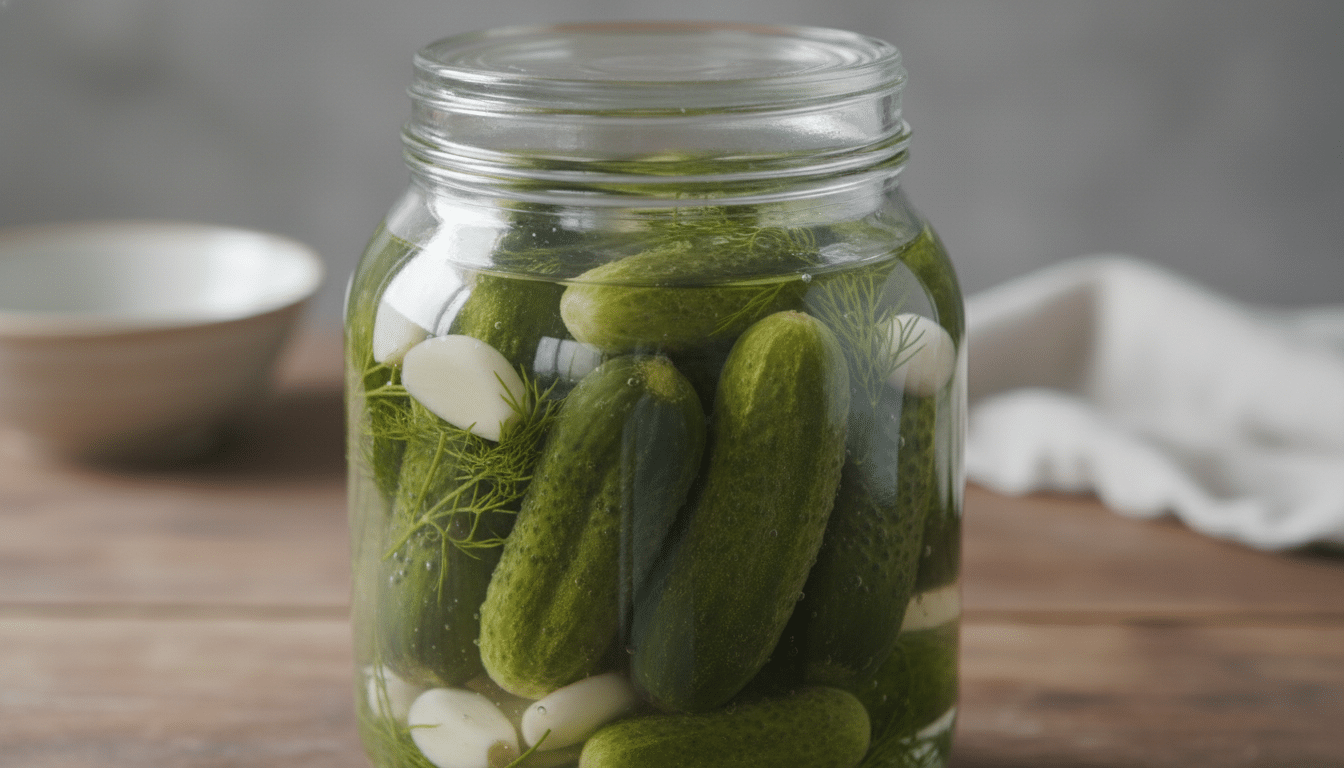
Place your jars in a cool, dark place, ideally between 65-75°F (18-24°C). This temperature range is optimal for lactic acid bacteria. Fermentation typically takes 5-14 days, but the exact time will depend on the temperature and your desired level of sourness and flavor. You’ll notice bubbles forming, the brine becoming cloudy, and the cucumbers changing color from bright green to an olive green. Taste your pickles after about 5 days and continue fermenting until they reach your preferred flavor and texture. This is the magical part of making a kosher pickle recipe.
Step 6: Storage
Once your pickles have reached their desired flavor, remove the fermentation weight and any airlocks. Seal the jars with regular lids and transfer them to the refrigerator. The cold temperature will significantly slow down the fermentation process. Your homemade kosher pickles will continue to develop flavor in the fridge and can last for several months, often becoming even better with time. Enjoying your own kosher pickle recipe is incredibly rewarding.
Troubleshooting Common Kosher Pickle Recipe Issues
Even experienced fermenters encounter issues sometimes. Here are some common problems and how to address them for your kosher pickle recipe:
Soft Pickles
This is a common complaint. Softness can be caused by using old cucumbers, cucumbers that aren’t pickling varieties, insufficient salt in the brine, or fermentation at too high a temperature. Ensure you’re using fresh, firm pickling cucumbers, maintain the correct salt ratio, and consider adding grape or oak leaves for their tannin content. If your pickles are very soft, they might be past their prime or fermented too long.
Mold Growth
Visible mold on the surface of the brine is usually a sign that your cucumbers or other ingredients were exposed to air. This is why keeping everything submerged under the brine with a weight is so critical. If you see white Kahm yeast (a harmless film), you can skim it off. However, if you see fuzzy, colored mold (green, black, pink), it’s best to discard the entire batch to be safe. Proper sanitation and submergence are key to preventing this in your kosher pickle recipe.
Off-Flavors or Smells
An unpleasant smell or taste can indicate a problem. A healthy ferment should smell pleasantly sour and tangy. If you detect strong, putrid, or yeasty odors, something may have gone wrong. This could be due to contamination, improper salt levels, or an incorrect fermentation temperature. While it’s rare with a properly executed kosher pickle recipe, trust your nose; if it smells bad, it’s likely bad.
Variations and Customizations for Your Kosher Pickle Recipe
The beauty of making your own kosher pickle recipe is the freedom to experiment and tailor it to your personal taste. While the classic garlic-dill profile is a staple, don’t be afraid to get creative.
Spicy Kosher Pickles
For those who love a kick, add dried red chili flakes, whole dried chilies (like arbol or de arbol), or even a sliced fresh jalapeño or serrano pepper to your jars. The heat will infuse into the pickles during fermentation, creating a fiery version of your favorite kosher pickle recipe.
Sweet and Sour Notes
While not traditional for a true “kosher dill,” you can experiment with adding a touch of sweetness to your brine for a different twist. A small amount of sugar (cane sugar or honey) can be added, but be mindful that it can also accelerate fermentation. For a more authentic sweet-sour profile, consider a separate recipe, but a slight adjustment can still be made to a kosher pickle recipe.
Herbal Explorations
Beyond dill, other herbs can complement the cucumber flavor. Try adding a sprig of fresh tarragon for a subtle anise note, or a few bay leaves for an earthy undertone. A pinch of celery seeds can also add a distinct flavor to your kosher pickle recipe. The possibilities are vast when it comes to customizing your kosher pickle recipe.
Storing Your Homemade Kosher Pickles
Once your kosher pickle recipe has fermented to perfection, proper storage is essential to maintain their quality and extend their shelf life. As mentioned, refrigeration is key. The cold temperatures of your fridge significantly slow down the activity of the lactic acid bacteria, effectively pausing the fermentation process. This means your pickles won’t continue to get sourer at a rapid pace, and their crispness will be better preserved. Stored in the refrigerator, homemade fermented pickles can last for several months, often up to 6 months or even longer if kept consistently cold. Always ensure the pickles remain submerged in their brine, as exposure to air can lead to spoilage. For the best flavor and texture, consume your pickles within a few months, but don’t be surprised if they disappear much faster once you discover how delicious your homemade kosher pickle recipe truly is!
Health Benefits of Fermented Foods and Kosher Pickles
Beyond their incredible taste, a homemade kosher pickle recipe offers a range of health benefits, primarily due to the natural fermentation process. Fermented foods are rich in probiotics, which are beneficial bacteria that contribute to a healthy gut microbiome. A balanced gut is linked to improved digestion, enhanced immune function, and even better mood regulation. When you consume a fermented kosher pickle, you’re essentially providing your gut with a dose of these helpful microorganisms.
Probiotic Powerhouse
The lactic acid bacteria responsible for fermenting your kosher pickle recipe produce lactic acid, which not only preserves the cucumbers but also creates an acidic environment that inhibits the growth of harmful bacteria. These probiotics can help restore balance to your gut flora, especially after antibiotic use or periods of stress. Including fermented foods like your homemade kosher pickle recipe in your diet is a delicious way to support overall digestive health.
Nutrient Absorption and Antioxidants
Fermentation can also enhance the bioavailability of nutrients in vegetables, making them easier for your body to absorb. Additionally, cucumbers themselves contain vitamins and minerals, and the fermentation process can sometimes create new ones. The spices used in a kosher pickle recipe, like garlic and dill, also contribute antioxidants and other beneficial compounds. So, every bite of your tangy kosher pickle recipe is not just a treat for your taste buds but a boost for your well-being.
Beyond the Jar: Creative Uses for Your Kosher Pickles
While enjoying your homemade kosher pickle recipe straight from the jar is a pure delight, these tangy treats are incredibly versatile in the kitchen. Don’t limit their potential!
Classic Deli Pairings
Naturally, the most iconic use for your kosher pickle recipe is alongside a classic deli sandwich. Pile them high next to pastrami on rye, a juicy corned beef, or a hearty Reuben. The sharp, briny crunch perfectly cuts through the richness of the meat and cheese, creating a harmonious flavor balance. They’re also fantastic with hot dogs, hamburgers, and grilled cheese. A side of your own kosher pickle recipe elevates any casual meal.
Culinary Applications
Finely chop your kosher pickles to add a zesty punch to tuna salad, chicken salad, or egg salad. Their distinct flavor adds depth and moisture that a regular sweet pickle relish can’t quite match. They can be incorporated into potato salad or macaroni salad for an unexpected tang. You can even use the brine from your kosher pickle recipe in dressings or marinades, or as a flavorful shot to settle an upset stomach (a common folk remedy!). Consider frying pickle slices for a unique appetizer or incorporating them into a gourmet burger topping. The possibilities for your homemade kosher pickle recipe are truly endless.
Comparison: Fermented vs. Vinegar Pickles
| Feature | Fermented Pickles (Kosher Style) | Vinegar Pickles (Quick Pickles) |
|---|---|---|
| :————– | :——————————- | :—————————— |
| Process | Natural lactic acid fermentation | Brined in hot vinegar solution |
| Flavor | Complex, tangy, deep sour | Sharp, acidic, often sweet |
| Texture | Crisp, firm | Can be softer, less ‘snap’ |
| Probiotics | Yes, rich in beneficial bacteria | No, heat kills bacteria |
| Shelf Life | Months (refrigerated) | Weeks to months (refrigerated) |

Close-up of bubbles rising in a glass jar of fermenting pickles, indicating active fermentation. The…
Comparison Analysis
| Feature | Fermented Pickles (Kosher Style) | Vinegar Pickles |
|---|---|---|
| :————– | :——————————- | :———————- |
| Process | Natural lactic acid fermentation | Vinegar-based brining |
| Flavor | Complex, tangy, probiotic-rich | Sharp, acidic |
| Texture | Crisp, firm | Can be softer |
+Pros
- Rich in probiotics, promoting gut health and digestion.
- Superior, complex tangy flavor profile compared to vinegar pickles.
- Retain a satisfying crisp texture through natural fermentation.
- Uses simple, natural ingredients, free from artificial preservatives.
- Customizable with various spices and herbs to suit personal taste.
- Economical way to preserve cucumbers and enjoy healthy snacks.
–Cons
- –Requires more time and patience due to the fermentation process.
- –Risk of spoilage (mold) if proper sanitation and submergence aren’t maintained.
- –Requires careful temperature control for optimal fermentation.
- –Initial batches may be inconsistent until technique is perfected.
- –Higher sodium content due to the salt brine necessary for fermentation.
Key Takeaways
- Authentic kosher pickles are traditionally fermented, not just vinegar-brined, offering a unique tangy flavor and crisp texture.
- The key to a great kosher pickle recipe lies in fresh pickling cucumbers, non-iodized salt, and a balanced blend of garlic and dill.
- Proper sanitation and temperature control are crucial for successful fermentation and preventing spoilage in your kosher pickle recipe.
- Homemade kosher pickles are rich in probiotics, offering significant gut health benefits.
- Customization is easy; experiment with different spices and herbs to personalize your **kosher pickle recipe** to your taste.
Frequently Asked Questions
What is the difference between a kosher pickle and a regular dill pickle?
A ‘kosher pickle’ primarily refers to a style of pickle that is traditionally fermented with garlic and dill, originating from Jewish delis. It relies on natural lactic acid fermentation, not necessarily a kosher certification, though many commercially certified pickles also follow this style. This distinguishes it from vinegar-brined pickles.
What kind of cucumbers should I use for a kosher pickle recipe?
The ideal cucumbers for a kosher pickle recipe are pickling varieties like Kirby or Persian cucumbers. They are smaller, firmer, and have thinner skins, which helps them stay crisp during fermentation and better absorb the brine. Avoid larger slicing cucumbers, which tend to become soft.
Can I use regular table salt for my kosher pickle recipe?
Yes, it is crucial to use non-iodized salt, such as pickling salt, kosher salt (without anti-caking agents), or sea salt. Iodine and anti-caking agents in regular table salt can interfere with the fermentation process, turn your pickles dark, and make the brine cloudy. This is a vital step for a successful kosher pickle recipe.
How do I ensure my homemade kosher pickles stay crunchy?
To keep your pickles crisp, ensure you use fresh, firm pickling cucumbers, maintain the correct salt concentration in your brine, and consider adding a grape leaf or oak leaf to each jar. These leaves contain tannins that inhibit softening enzymes. Also, avoid fermenting at excessively high temperatures.
How long does it take for a kosher pickle recipe to ferment?
Fermentation typically takes 5-14 days at room temperature (65-75°F or 18-24°C). The exact time depends on the temperature and your desired level of sourness. Start tasting after 5 days and continue until they reach your preferred flavor and texture. This is a key part of mastering your kosher pickle recipe.
Is white film on my fermenting pickles normal?
Yes, white film or scum on top of your brine is usually Kahm yeast, which is harmless. You can skim it off. However, if you see fuzzy, colored mold (green, black, pink), it’s best to discard the entire batch to be safe, as this indicates contamination. Always keep cucumbers submerged for your kosher pickle recipe.
How should I store my homemade kosher pickle recipe?
Once fermented to your liking, store your homemade kosher pickles in sealed jars in the refrigerator. The cold temperature slows down fermentation, preserving their flavor and crispness. They can last for several months in the fridge.
Are homemade kosher pickles good for you?
Yes, fermented kosher pickles are an excellent source of probiotics, beneficial bacteria that support gut health, digestion, and the immune system. The natural fermentation process creates these good bacteria, making your homemade kosher pickle recipe a healthy addition to your diet.
Can I add other spices to my kosher pickle recipe?
Absolutely! You can customize your kosher pickle recipe by adding red pepper flakes for heat, different herbs like tarragon or bay leaves, or even celery seeds. Experiment with various spice combinations to find your perfect flavor profile.
Can I use the leftover brine from my kosher pickle recipe?
Yes, the brine from your kosher pickle recipe is packed with flavor and probiotics. You can use it in salad dressings, marinades, as a base for soups, or even as a flavorful shot for an upset stomach or muscle cramps. Don’t let that precious brine go to waste!
Conclusion
Embarking on the journey of making your own kosher pickle recipe is not just about preserving cucumbers; it’s about embracing a time-honored tradition, connecting with your food, and ultimately, creating something incredibly delicious and beneficial for your health. From the careful selection of crisp pickling cucumbers to the patient wait as fermentation works its magic, every step in crafting a homemade kosher pickle recipe is a rewarding experience. You’ve learned the secrets to a perfectly crunchy texture, the importance of the right salt and water, and how a medley of garlic and dill transforms simple vegetables into a complex flavor powerhouse. Now, with the knowledge and confidence to tackle any kosher pickle recipe, you’re ready to fill your pantry with jars of tangy, probiotic-rich goodness. Imagine the satisfaction of pulling out a jar of your own handcrafted pickles, knowing every ingredient, every step, was chosen with care. So, gather your ingredients, prepare your jars, and dive into the wonderful world of fermentation. Your taste buds, and your gut, will thank you for mastering this classic kosher pickle recipe. What are you waiting for? Start your pickling adventure today and enjoy the unparalleled taste of homemade!